
Contract signed
Homeowner receives welcome message with timeline overview and what to expect at each stage.
Client Communication·Install Pipeline Updates
After the sale, homeowners want to know what's happening — rebate status, install date, grid connection, commissioning. Your ops team spends hours answering the same questions instead of moving jobs forward.
The problem
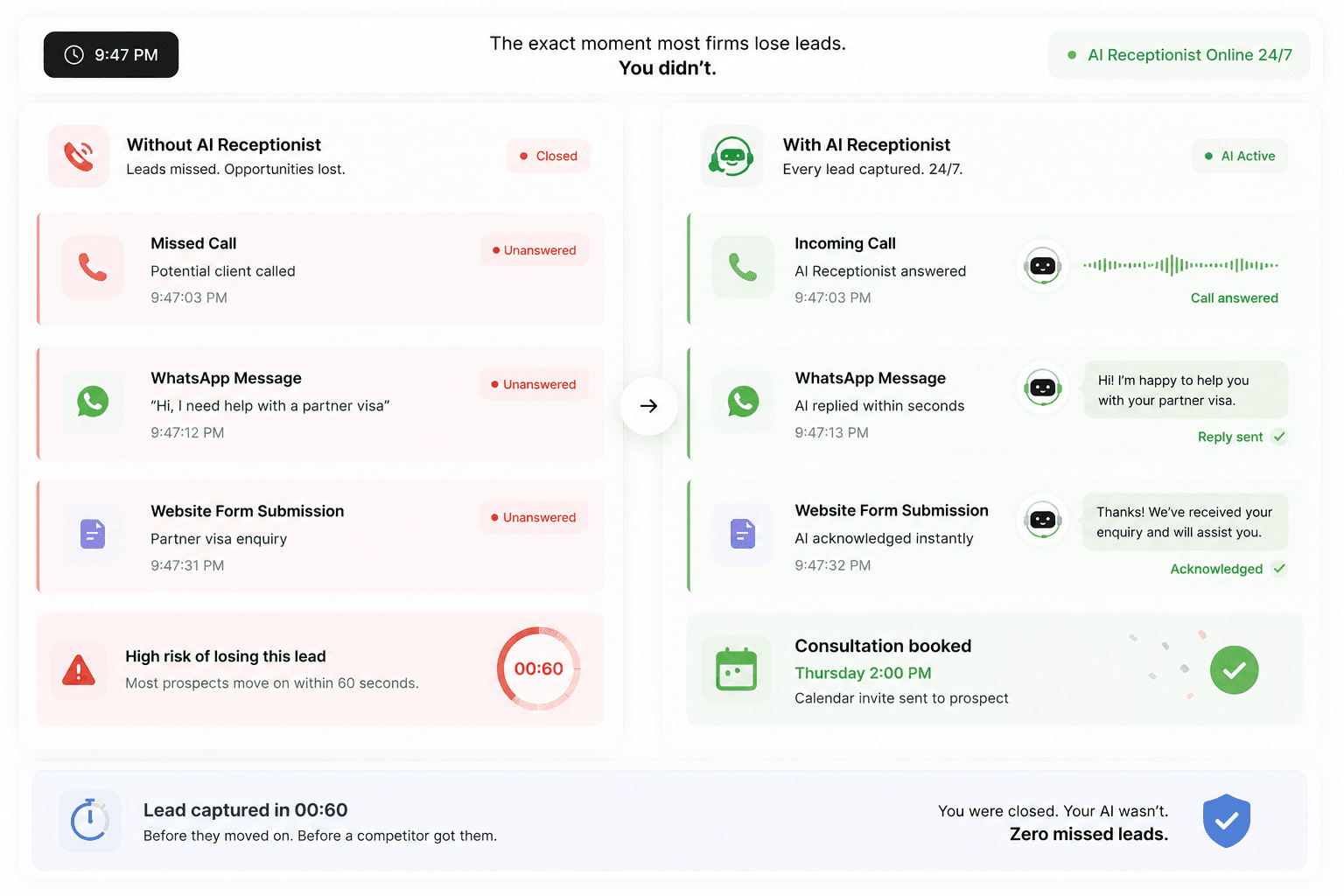
The sale is done. Then the silence starts. Homeowners wait weeks without hearing anything — rebate lodged? Install scheduled? When is the crew coming? They call. They email. They leave Google reviews mentioning poor communication before the panels are even on the roof.
Your ops and admin team field the same status questions dozens of times per week. Each call interrupts scheduling, paperwork, and the work that actually gets systems on roofs.
This isn't a customer service problem — it's a communication gap. Homeowners don't need hand-holding. They need timely, automatic updates at every milestone.
What this looks like today
Homeowners call weekly asking about rebate status and install dates
Updates depend on whoever remembers to send them — inconsistent across jobs
Grid connection and commissioning milestones pass without homeowner notification
Negative reviews cite 'poor communication' before install quality is even tested
Admin staff spend 30%+ of their day on status calls and emails
No single view of where each job sits in the install pipeline
What we build
Every component designed for australian solar and renewable energy installers — wired together, not sold separately.
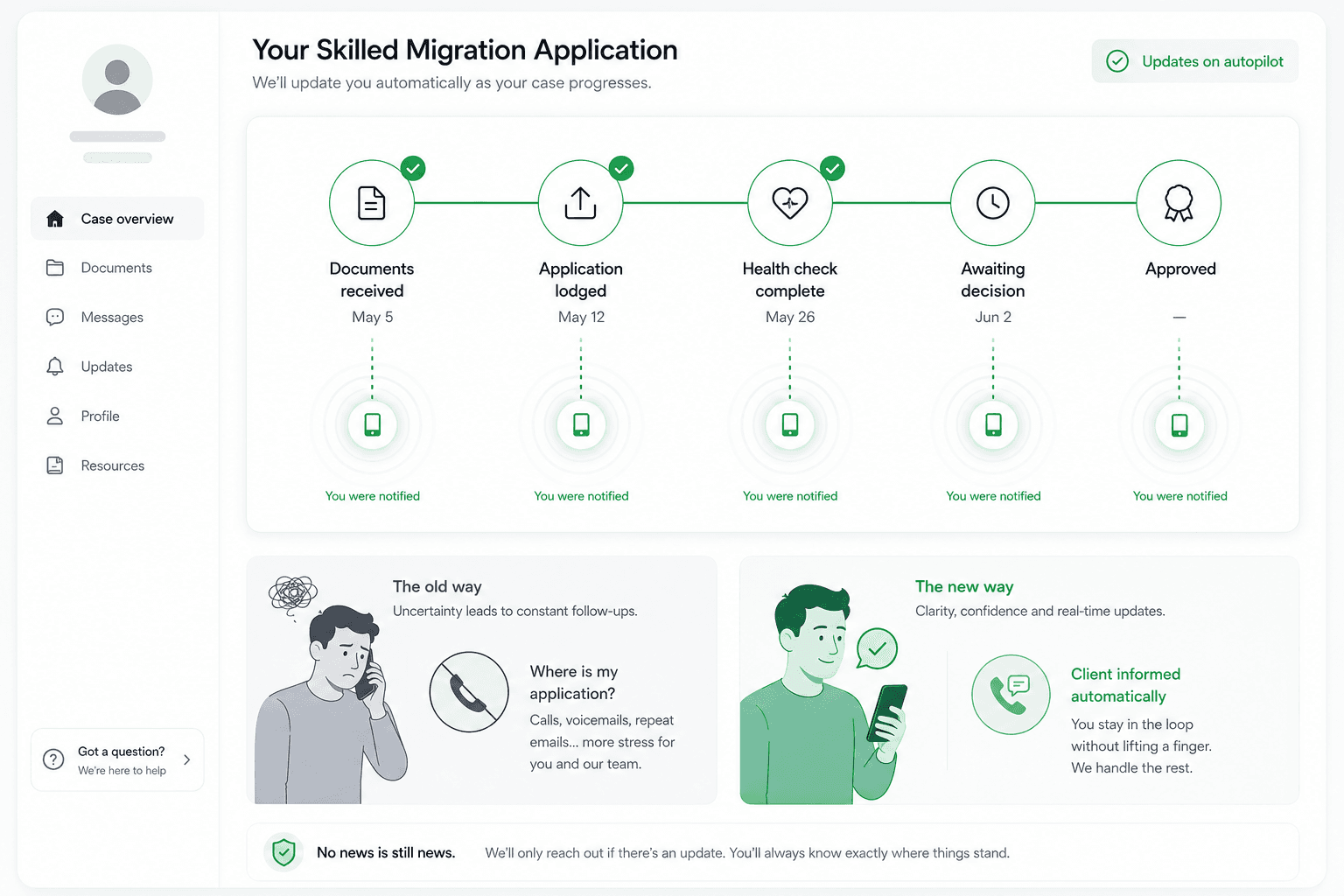
Automated SMS or email at every stage — contract signed, rebate lodged, install scheduled, crew dispatched, grid connected, commissioned.
Homeowners receive updates when STC claims are submitted, approved, or if documentation is needed — without calling your office.
Confirmation when install date is set, reminder 48 hours before, and notification when the crew is en route.
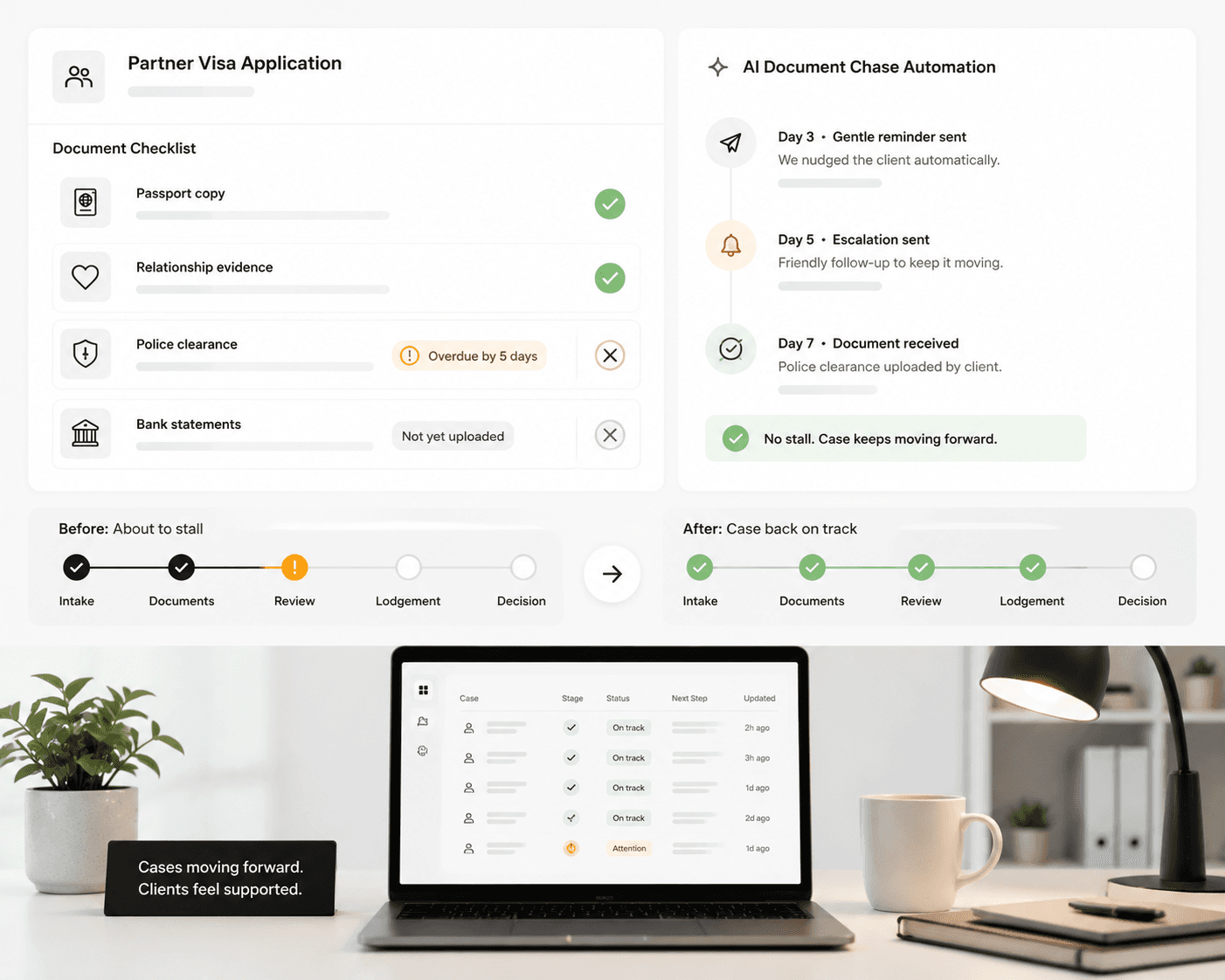
Missing bills, roof photos, switchboard images, and finance paperwork chased automatically — with escalation if not received.
Weather delays, grid connection hold-ups, and equipment backorders trigger proactive homeowner communication — not silence.
Optional live status page where homeowners check job progress without calling. Reduces inbound volume significantly.
How it works
Step by step — most implementations go live in two to three weeks.
Homeowner receives welcome message with timeline overview and what to expect at each stage.
System monitors CRM or project management tool for stage changes — rebate lodged, install booked, etc.
Each milestone triggers a personalised SMS or email. Homeowner knows exactly where their job stands.
Missing paperwork triggers automated reminders with upload links. Escalation if not received within your timeframe.
Pre-install reminder, crew en-route notification, and post-install confirmation — all automatic.
Homeowner notified when system is live, grid connected, and monitoring activated. Handoff to review request.
Outcomes
Inbound status calls drop
Homeowners who know what's happening stop calling to ask.
Admin time recovered
Ops team focuses on moving jobs — not repeating the same updates.
Better homeowner experience
Proactive communication builds trust through the longest part of the journey — post-sale to commissioning.
Fewer communication-related reviews
Negative reviews citing 'no updates' disappear when milestones are communicated automatically.
Faster document collection
Automated chasing means rebate paperwork and site docs arrive without manual follow-up.
Pipeline visibility
See which jobs are stuck, delayed, or missing docs — before homeowners complain.
Timeline
Phase 01
Week 1
Discovery: install pipeline audit, milestone mapping, current communication gaps, CRM/project tool review.
Phase 02
Week 2
Build: trigger configuration, message templates, document chase workflows, and CRM integration.
Phase 03
Week 3
Go live on live jobs. Monitor inbound call volume, message delivery, and homeowner feedback. Refine messaging.
Common Questions
No. It reads milestones from your existing CRM or project tool and sends homeowner-facing updates. Your team keeps working in the systems they already use.
Delay triggers are built in. Weather, supply, and grid connection hold-ups send proactive updates — so homeowners hear from you first, not the other way around.
Yes. Replies route to your team or AI for common questions. Complex issues escalate to a human with full job context.
Most installers see 40–60% reduction in status-related inbound within the first month. Exact impact depends on current communication practices.
Yes. Separate tracks for STC claims, state rebates, finance approvals, and grid connection — each with stage-appropriate messaging.
Battery, solar-only, and upgrade jobs can have different milestone sequences and messaging. All configurable.
Next step
Book a strategy call and we'll walk through how this system fits australian solar and renewable energy installers specifically.