
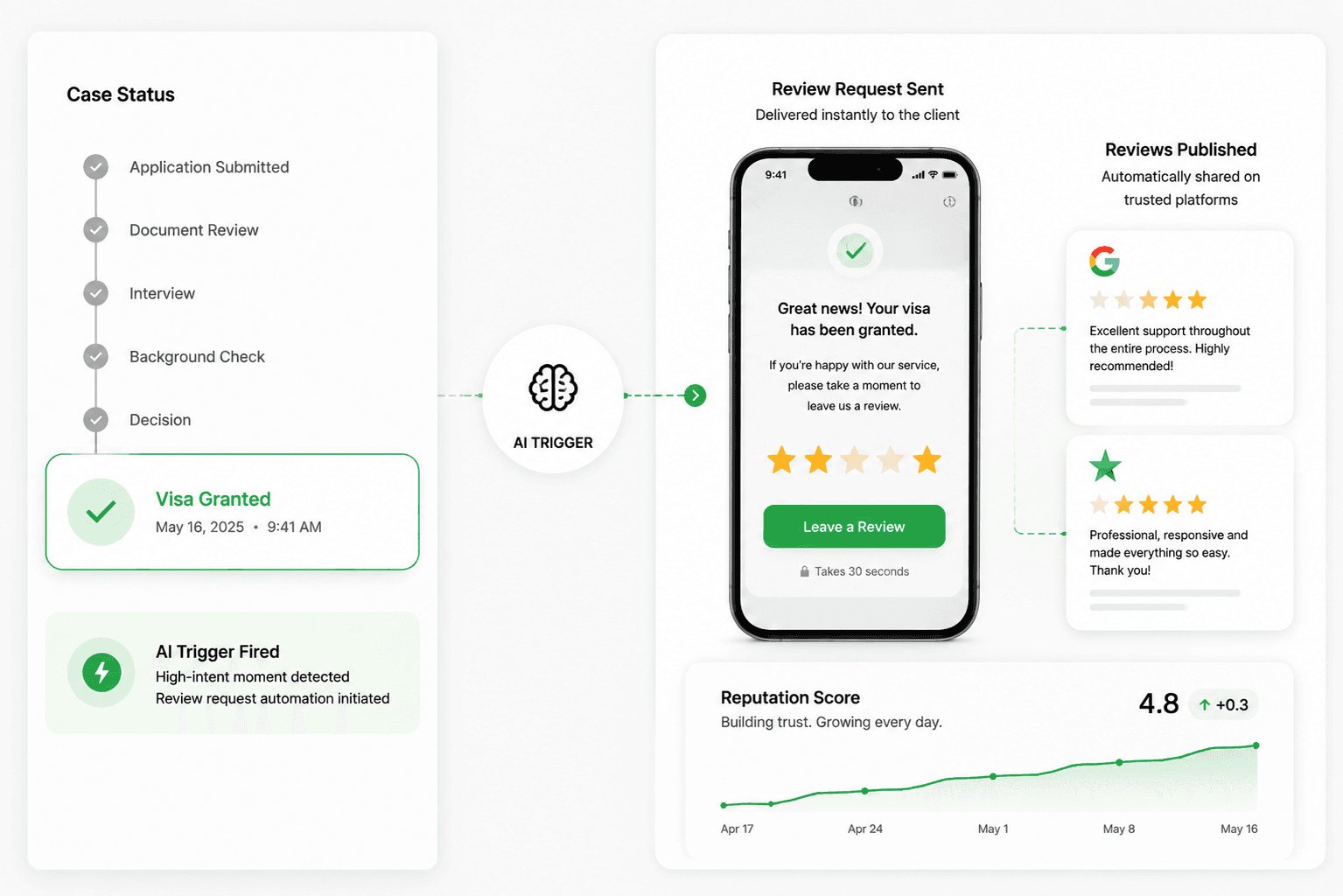
System commissioned
Trigger detected via CRM, project tool, or monitoring platform integration when the system goes live.
Reputation·Commissioning Review Engine
The best moment to ask for a Google review is when the homeowner watches their system go live and sees the app showing first generation. That moment passes fast. We capture it automatically.
The problem
Commissioning day is the emotional peak of the solar journey — panels on the roof, app connected, first kilowatts generating. Homeowners are excited, grateful, and telling their neighbours.
Then your crew packs up and drives away. Nobody asks for a review. Three weeks later, when someone remembers, the homeowner has moved on. The goodwill is gone. The review never gets written.
Meanwhile, competitors with fewer installs but better review systems rank higher on Google — and win the next $120 lead because homeowners trust the stars.
What this looks like today
Review requests happen ad-hoc — if a rep remembers after install
The ask often comes weeks post-commissioning when excitement has faded
Google profiles have fewer reviews than competitors despite more installs
Homeowners want to help but face friction finding the review link
Negative reviews from communication gaps outweigh the positive ones you never collected
No tracking of which customers were asked or responded
What we build
Every component designed for australian solar and renewable energy installers — wired together, not sold separately.
System detects commissioning milestone and sends a review request within hours — while the homeowner is still watching their generation app.
A genuine congratulations on going live precedes the ask. Feels like a thoughtful follow-up, not a marketing blast.
Direct link to your Google Business Profile review page. No searching, no logging in. One tap from SMS.
If no review within 72 hours, one follow-up message. Sequence stops after two touches — no pestering.
Jobs with open complaints, rework, or communication flags route to internal feedback — not public review.
Monitor requests sent, click-throughs, reviews published, and average rating trend over time.
How it works
Step by step — most implementations go live in two to three weeks.
Trigger detected via CRM, project tool, or monitoring platform integration when the system goes live.
Personalised message congratulating the homeowner — references their system size and suburb.
Within hours, a short ask with direct Google review link. SMS preferred — highest open rates.
Homeowner taps link, lands on Google review page, leaves a rating. Friction removed.
Single reminder at 72 hours if no review received. Then the sequence closes.
Review published, rating captured, job marked complete in the review system.
Outcomes
Steady Google review flow
Consistent requests at peak delight produce reviews without manual effort.
Higher local search ranking
Google rewards recent, frequent reviews with better placement in local search.
More trust for new leads
A well-reviewed profile is often the deciding factor when homeowners compare installers.
Better conversion on paid leads
Social proof from genuine reviews reduces hesitation before enquiry.
Competitive gap on Google
Most installers have under 30 reviews. Consistent generation creates visible separation.
Issue detection before public damage
Unhappy homeowners filtered to internal feedback before they leave a public one-star review.
Timeline
Phase 01
Days 1–3
Discovery: Google Business Profile audit, commissioning trigger identification, message architecture, and issue filter rules.
Phase 02
Days 4–7
Build: trigger integration, message writing and approval, Google review link setup, and delivery channel config.
Phase 03
Week 2
Go live. First review requests sent at commissioning. Monitor conversion, refine timing and messaging.
Common Questions
The issue filter catches jobs with open complaints, rework, or flagged communication problems. Those homeowners go to internal feedback first — not a public review request.
Typically 20–40% of requests result in a published review. An installer commissioning 20 systems per month can expect 4–8 new Google reviews monthly — compounding over time.
Yes. Google permits asking customers for honest reviews. Messages comply with Google's review policies — no incentives, no selective asking of happy customers only.
Google is primary. The system can also direct to ProductReview, Facebook, or SolarQuotes profile if configured.
Triggers can come from CRM stage changes, project management tools, or monitoring platforms like SolarEdge and Fronius. We work with whatever signals your team already uses.
The celebration-first approach and two-touch maximum keep it genuine. Homeowners who just watched their system go live are usually happy to share — if you ask at the right moment.
Next step
Book a strategy call and we'll walk through how this system fits australian solar and renewable energy installers specifically.